Biology and human life
Unit 1 · Introduction to Biology
How biology is applied in medicine, agriculture, industry, the environment and forensic science, and the ethical questions it raises.
Why study biology?
Biology is not only a school subject. Almost every part of daily life depends on it: the food we eat, the medicines we take, the water we drink, the clothes we wear and the health of the environment we live in.
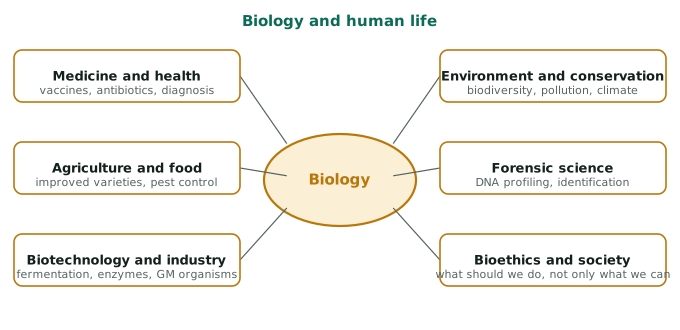
Medicine and health
- Understanding disease: knowing how pathogens (bacteria, viruses, parasites) cause disease led to hygiene, sanitation and targeted treatment.
- Vaccines train the immune system before infection. Smallpox was eradicated and polio is close to being so.
- Antibiotics (such as penicillin, from the fungus Penicillium) kill or stop bacteria; misuse leads to antibiotic resistance, itself an example of evolution.
- Diagnosis and treatment: blood tests, PCR tests for pathogens, imaging, insulin made by genetically modified bacteria, and, in some diseases, gene therapy and stem-cell treatments.
- Public health: understanding vectors such as the Aedes mosquito (dengue) allows effective control.
Agriculture and food security
- Plant and animal breeding has produced high-yielding, disease-resistant varieties (for example improved rice varieties from the Rice Research and Development Institute).
- Biological control uses natural enemies of pests instead of, or alongside, chemical pesticides.
- Tissue culture produces many identical disease-free plants quickly (banana, orchids).
- Genetically modified (GM) crops carry genes introduced from other organisms (for example insect-resistant Bt cotton).
- Soil biology, nutrient management and post-harvest storage reduce losses.
Biotechnology and industry
Biotechnology is the use of living organisms, cells or their molecules to make products or provide services. Examples:
- fermentation by yeast and bacteria: bread, curd, toddy, beer, vinegar, antibiotics;
- enzymes from microbes in detergents, food processing and leather;
- biofuels such as biogas and bioethanol;
- bioremediation: using microbes to clean up oil spills and sewage;
- recombinant DNA technology: making human insulin, growth hormone and vaccines in bacteria or yeast.
Environment and conservation
Understanding ecology lets us manage ecosystems, restore damaged habitats, control invasive species and measure pollution using bioindicators (lichens for air pollution, mayfly nymphs for clean water). Conservation biology works to protect biodiversity. Sri Lanka is part of the Western Ghats and Sri Lanka biodiversity hotspot, with many endemic species, so protecting rainforests such as Sinharaja, mangroves and coral reefs is a national priority.
Forensic science
Forensic biology uses biological evidence at crime scenes: blood, hair, saliva and tissue. DNA profiling (fingerprinting) compares highly variable regions of DNA to identify a person; it is also used to establish parentage and to identify victims of disasters. Entomology (insects on a body) can help estimate the time of death.
Global challenges
Biology contributes to feeding a growing population, controlling emerging infections such as COVID-19, understanding and responding to climate change, protecting freshwater and marine resources, and stopping the loss of species.
Bioethics
Scientific ability does not always tell us what we should do. Bioethics studies the moral questions raised by biology and medicine, for example:
- the use of animals in research (the "3 Rs": replace, reduce, refine);
- informed consent and privacy of genetic information;
- genetic modification of crops, animals and humans, and biosafety of releasing GM organisms;
- access to treatments and fair sharing of benefits from biological resources;
- cloning and stem-cell research.
A good biologist is honest in reporting results, careful with living material and responsible towards society and the environment.
Exam tip: Questions often ask you to link a biological principle to its application (for example: antibiotic resistance, natural selection and the misuse of antibiotics). Learn one clear example for each area above.
Deshapriya Senevirathne. B.Sc. (Hons) Biology Special, University of Peradeniya — graduated with a class pass. All the content and lessons in A/L Biology on Paadama are reviewed by Deshapriya Senevirathne, and the lessons are taught by him.